
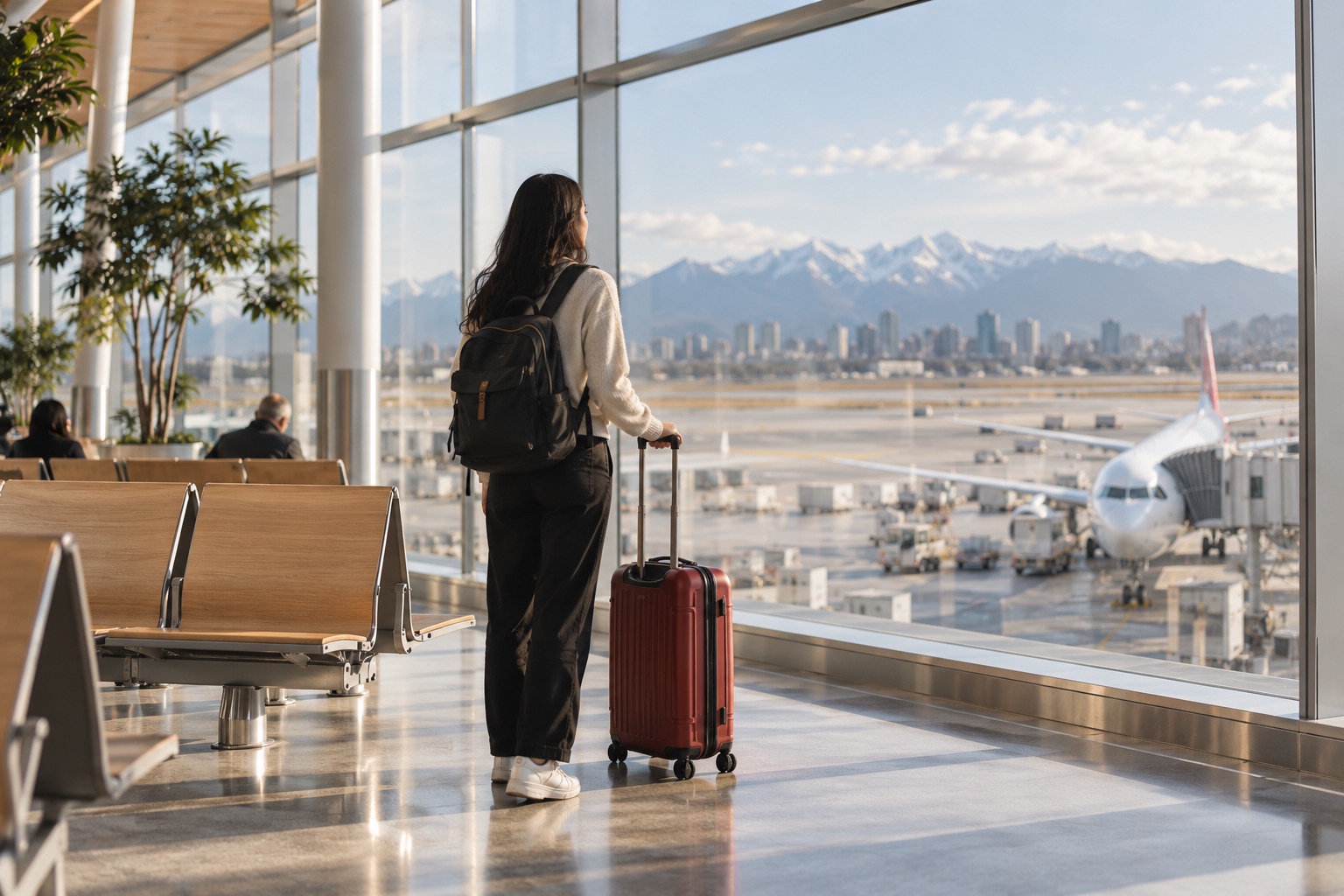
Choose an arrival date with time to settle in
Your journey starts with a calendar decision. Compare the start of classes, welcome activities, accommodation availability and your rest needs. Arriving immediately before the first class may reduce some expenses, but leaves little room for delays, extra procedures or learning the transport system.
IRCC's arrival instructions do not set a uniform period before programs begin. However, students cannot start working on or off campus before their studies start. Your settling-in budget must therefore work without that anticipated income.
Determine your own buffer from the actual journey. Several flights and a major time difference require different arrangements from a direct journey. Also ask the institution about late arrival consequences for classes, registration, accommodation and deferral possibilities. Written answers help decisions if the calendar changes.
Read your itinerary as a sequence of stages
For every flight, note the exact airport, terminal, local times and operating carrier. Two airports named after the same region are not interchangeable. An apparently attractive ticket may require changing airports or an extra night that completely changes its value.
Check transit requirements in every country you pass through, according to your nationality and documents. Permission to travel to Canada does not automatically satisfy a stopover country's requirements. Consult its authority and your carrier before buying a complex itinerary.
Also ask about baggage and missed connections. Do not presume separate tickets offer the same solutions as travel bought under one reservation. Keep the answers and applicable conditions so you need not reconstruct them during delays.
If travelling with a child or needing assistance, explain precise needs to the carrier: movement, equipment and expected help. Confirm arrangements for the entire journey rather than only the first flight.
Keep important information accessible throughout the journey
Store travel documents and your study folder somewhere easy to reach and monitor. Also prepare offline digital copies without assuming they automatically replace required originals. Do not place your only useful copies in luggage unavailable until after checks.
Add a short sheet with your arrival address, accommodation phone number, institutional contact and someone to notify. Write names and addresses in their local form. Showing precise information is often easier than pronouncing it from memory after a long travel day.
Keep a separate space for receipts and new instructions received en route. Photograph baggage tags before they disappear and retain reservation references. If your phone becomes unusable, a small paper sheet can preserve essential arrangements.
Understand the role of your first Canadian airport
CBSA explains that study permits are issued at the first port of entry into Canada, even when another flight then takes you to your study city. Allow for this when choosing connections. International arrival involves more than quickly moving between boarding gates.
Follow signs and staff instructions. Give accurate information consistent with your project, and ask for rephrasing if you do not understand a question. Preparation should help you find relevant documents easily, rather than recite a memorised story.
When handed a document, take time to read your name, dates and conditions. Report apparent errors to appropriate staff and ask how to correct them. Then store the document securely; it will serve several purposes during your stay.
If processing takes longer than expected, contact the carrier about onward travel and your accommodation about arrival time. Do not leave a compulsory stage merely to run for a connection. Your arrangements must accommodate changed plans.
Reach your accommodation with a simple plan
Choose transport considering the hour, number of people, luggage and final distance. Compare options announced by the airport and local operator. Public transport may work perfectly during the day and become more complicated after the last service.
Prepare the required payment method and keep the accommodation contact's number accessible. If someone collects you, agree on a precise location and a way to confirm arrival. “I'm outside” helps less than a terminal, floor and door.
In a fictional example, Gabriel lands in a large city before travelling to a campus in a neighbouring municipality. He compares public transport with two changes against reserved transport. His late arrival and two suitcases lead him to choose a direct solution for the first night, then explore public transport rested the next day.
At the accommodation, check keys, access, emergency contacts and essential facilities. Keep the first evening light. A simple meal, shower and sleep may be more useful than a long series of immediate purchases.
Organise your first campus procedures
Consult your institution's welcome instructions and distinguish necessary appointments from optional activities. Locate the international service, registration office and IT support. Not every formality requires a physical visit, but know where to check progress.
Test access to the student portal and courses. Compare your timetable with actual rooms and buildings. A walk to find your bearings reveals long routes, accessible entrances or campus changes before the first busy morning.
Then check outstanding practical matters: health coverage, student card, food services, library, transport and accommodation. Avoid immediately buying expensive equipment before learning program recommendations. Welcome services may explain what is provided, rentable or better left until later.
Review after three days and again after a week
After the first days, assess four things: can you sleep properly, eat, reach classes and contact useful people? Address any missing element before adding activities. Comfortable settling-in depends more on these basics than a packed schedule.
Sort difficulties by the appropriate contact. Timetable errors go to the school, accommodation access to the housing contact, and administrative conditions to the competent authority. Describing the problem in a few sentences with useful documents makes help requests easier to handle.
At week's end, update your budget and calendar. Note settling-in expenses that will not recur monthly and routes you will use regularly. You can then move from travel arrangements to a study routine, with practical reference points and clearly identified deadlines.